
Intro
I’m Ayush Singh Patel, and for the past eight years I’ve been working as an industrial designer in the consumer electronics industry. Over this time, I’ve led and contributed to 250+ SKUs shipped at a multi-million-unit scale. My work spans wired and wireless earphones, neckbands, headphones, home audio, fitness trackers, smartwatches, and mobile and gaming accessories. I’ve collaborated with global technology and entertainment partners like Dolby, Bose, Dirac, Bragi, Marvel, Netflix, and DC. My work has been showcased at CES 2023 and Autodesk Design Summit 2024, and I was recently awarded the Red Dot Design Award in the kids wearables category.


What sparked your interest in design?
Growing up, I was always drawn to tech. Most of my time after school was spent glued to Discovery Channel, watching shows about the future. I didn’t fully understand everything back then, but I knew I was fascinated.
One moment that really stuck with me was seeing an interview of Luigi Colani about designing cars for Ferrari. That’s when it clicked that designing these kinds of machines could actually be a career. From that point on, I was obsessed with finding a way into design.
I spent hours in cyber cafés just researching whatever I could, from new tech to emerging products. Around that time, HTC really stood out to me. They weren’t just making phones, they were solving problems through design. Something as simple as front-facing speakers for better media consumption on touchscreen phones felt thoughtful and intentional, and that stayed with me.
When it was finally time to apply, I realized there were barely a couple of universities in India offering what I was looking for. During my interview, when I was asked why I wanted to be a designer, I went on about tech, HTC, and how design was shaping the way we interact with products. That’s when my professor introduced me to the term “industrial design.” From there, everything just made sense, and the rest is history.
As an industrial designer in consumer tech, you’re constantly working within constraints like cost, manufacturability, assembly, durability, repairability, time to market, supply chain limitations, and even packaging and logistics.
The earlier you account for these, the better your chances of your design making it through to production.

What are some of your favorite projects?
This was one of my first in-house, ground-up design projects. A little backstory: I started my career at a consumer tech startup. At the time, the company didn’t really have the resources to invest in R&D. An industrial designer was mostly seen as someone who could make good-looking renders and handle a bit of CMF here and there. I did that for about a year, and over time, the value of design started becoming more visible within the team. Eventually, the company reached a point where they were ready to invest in building things in-house.
This project came purely from that shift, and honestly, from a personal urge to create something meaningful.
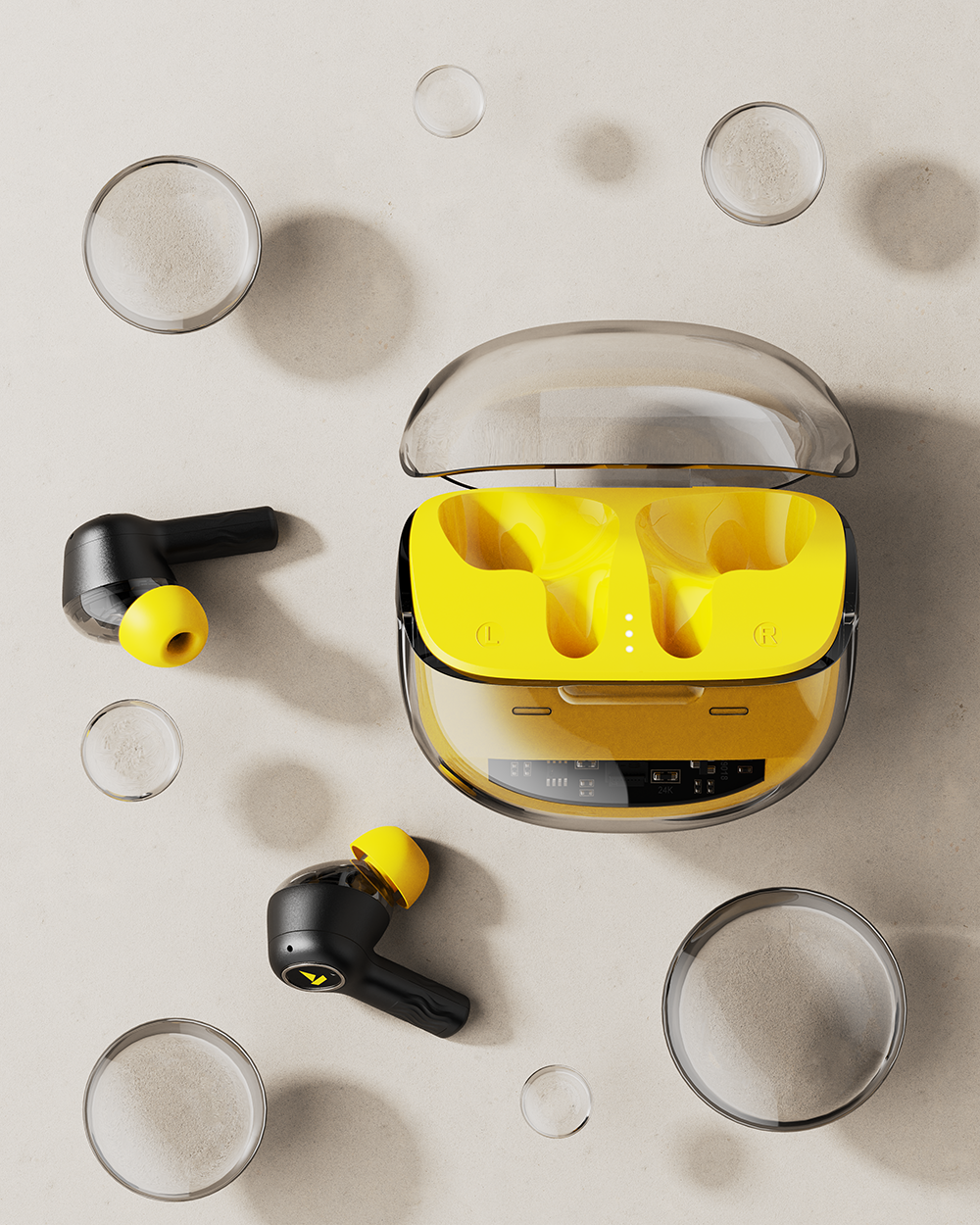
We were a small team, so it was just me and the product manager taking it all the way from concept to mass production. The goal was to create a semi-premium TWS with a battery that could last for weeks without charging. That meant fitting a large lithium-ion battery into something that still had to feel pocketable, which was a real challenge.
What we ended up making wasn’t perfect in my eyes, but it was a strong blend of engineering and design. Internally, there was a lot of resistance. People felt it was too big and the aesthetics were a bit unorthodox for the time. The plan was to launch around 10,000 units and then phase it out.
But once it hit the market, the response was completely different. People loved it. Since 2023, it’s continued to sell and has become one of the top-performing products in its category. At one point, it even generated more revenue than the entire audio category had in a previous fiscal year.
Even now, when I’m traveling and I spot someone using it, it still puts a smile on my face. It’s a reminder that something people once doubted ended up finding its place with so many users.


You have a lot of experience in consumer electronics. What are some tips or best practices you would share for anyone who wants to be a successful designer in this industry?
One of my key learnings has been that the design process needs to stay flexible. It should adapt to the type of project, the client, and the organization you’re working with. You can’t stay rigid to a process just because that’s how you were taught. More often than not, you’ll face situations where you have to choose between how you usually do things and how they need to be done in that moment. That’s where you learn to tweak your process.
In consumer electronics, 3D modeling and rendering sit at the heart of industrial design. If you don’t understand how things like parting lines, wall thickness, or draft angles impact manufacturing, your early design decisions won’t hold up. By the time the product reaches production, it goes through heavy optimization and can end up very different from what you originally proposed.
A great exercise I always recommend is to take apart an existing 2-3 part molded product. Study how it’s been put together, why certain decisions were made to accommodate internal components, and then try redesigning it in 3D. It gives you a real sense of designing within constraints. Because that’s what the role really is. As an industrial designer in consumer tech, you’re constantly working within constraints like cost, manufacturability, assembly, durability, repairability, time to market, supply chain limitations, and even packaging and logistics. The earlier you account for these, the better your chances of your design making it through to production. At the end of the day, these decisions determine whether your ideas stay as concepts in a sketchbook or end up in the hands of millions of users.

Where in your process do you use KeyShot Studio?
I’ve been fortunate to grow in a design journey where I’ve not only learned the roles and processes of design, but also what it takes to help scale a company and step beyond a defined role for personal and professional growth. I’ve always been quite process-oriented, but my approach has constantly evolved based on the needs of the organization.
Working in startups, the expectation was to deliver high-quality outcomes that didn’t just communicate ideas, but felt as close as possible to the final product for both internal teams and end users. A big part of my role was presenting designs at a very high level of realization. We relied heavily on 3D modeling and rendering to do this. A lot of our effort went into thinking through manufacturability first, and then translating that into hyper-realistic visuals that could clearly communicate the product’s value to marketing and sales teams. This was crucial in helping them build conviction and secure cost approvals for production. Quick 3D visualization using KeyShot became a core part of our process. Anything before rendering often stays behind the curtain and is harder for non-design stakeholders to engage with. But renders act as a universal language. They help people clearly see what we’re building and make more informed decisions with confidence.


What are your favorite KeyShot tools or features?
There are quite a few tools I’ve grown to love over the years that have kept me committed to the software, but a few things stand out immediately.
The first is the material library. In consumer electronics, materials tend to stay fairly consistent because of manufacturing scale, so having a large set of ready-to-use presets is incredibly helpful. You can quickly drag and drop materials onto models and get high-quality visuals within minutes. It’s a huge advantage during tight deadlines, but also really useful while designing, just to keep checking how your surfaces and finishes are shaping up. The second is the user interface. Back in design school, most rendering tools were built around animation workflows and came with a steep learning curve and complicated UI. This one feels far more approachable. You can get started quickly, and as you go deeper, you realize the more complex capabilities are there, just not overwhelming you upfront. It grows with you. The more you push your own boundaries, the more you discover new ways to get better outputs.
And lastly, it works as a one-stop solution for an industrial designer’s rendering and animation needs. Over the years, I’ve seen the development stay very in sync with the industry. As things evolve, the software evolves with it. New features keep getting added that help you level up while staying aligned with current standards. A good example is how AI-based rendering started getting integrated right around the time designers began exploring those workflows more actively.

What advice would you give to someone interested doing what you do?
As a designer, your biggest tool isn’t just what you learned in university or the software you pick up along the way. It’s empathy. The ability to listen, to understand, and to solve for others. To notice what people overlook and create solutions they didn’t know they needed, but once they use them, it just makes their everyday life easier. This way of thinking also helps you break out of the boundaries of a single industry. You’re not limited to a niche. Every field has its own depth of knowledge, and the more you empathize, the more you’re able to tap into that.
I’ve always believed that industrial design sits at the intersection of multiple design and engineering disciplines. When you truly understand the strengths and limitations of the people you work with, you’re able to do more justice to the solutions you create. It also brings a level of informed clarity to your decisions, because your solutions aren’t just driven by your perspective, but shaped by everyone involved in bringing the product to life.
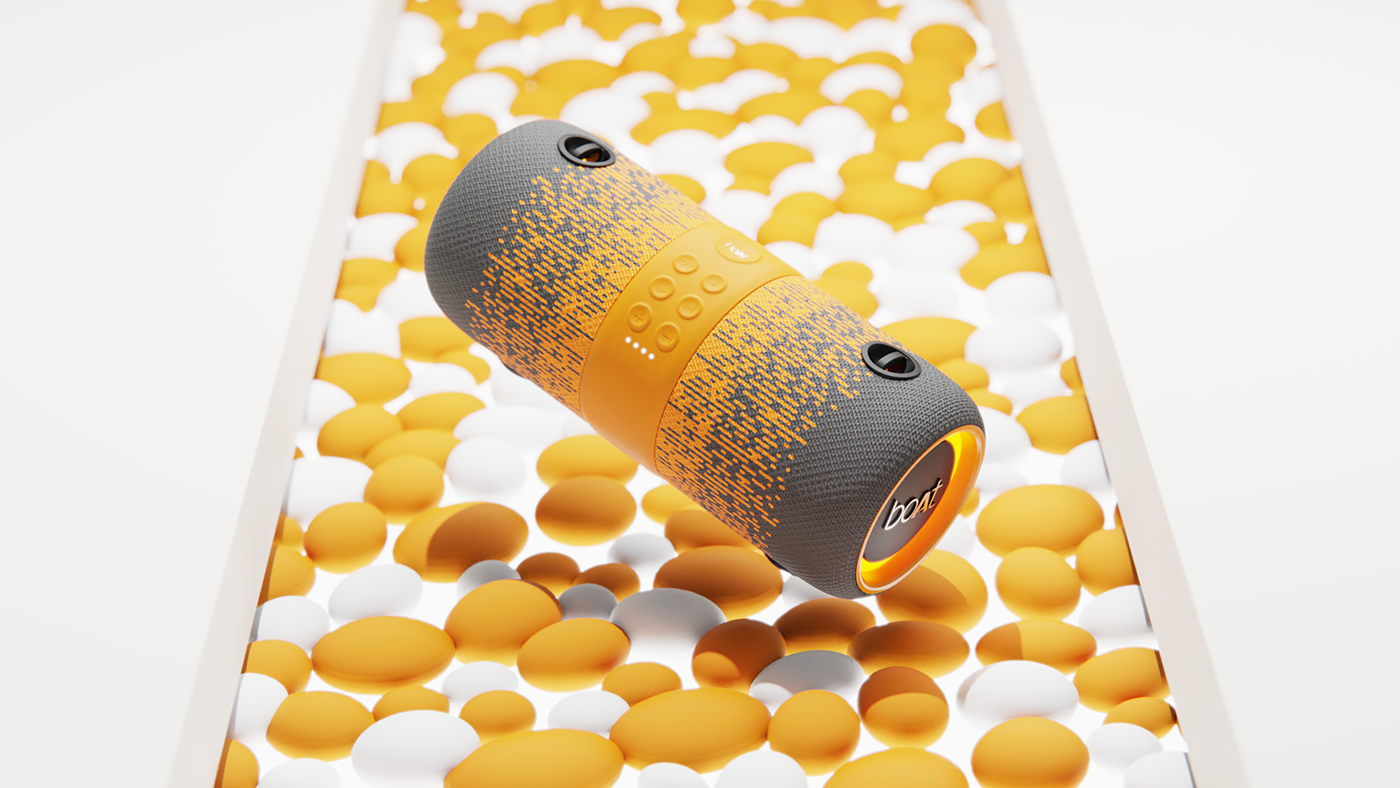
"Renders act as a universal language. They help people clearly see what we’re building and make more informed decisions with confidence."
Related Artists