
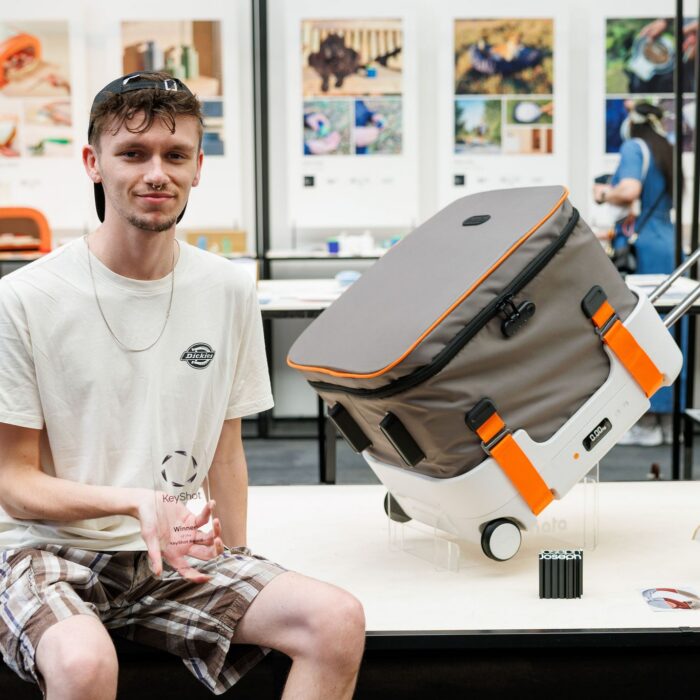
Introduction
The KeyShot Award was created to celebrate emerging talent that demonstrates outstanding design thinking and excellence in visual communication within product design. Presented annually at New Designers in London, the award recognizes an exceptional graduate selected by a panel of industry experts.
Meet the 2026 winner, Sam Collins, and explore the project that set him apart.
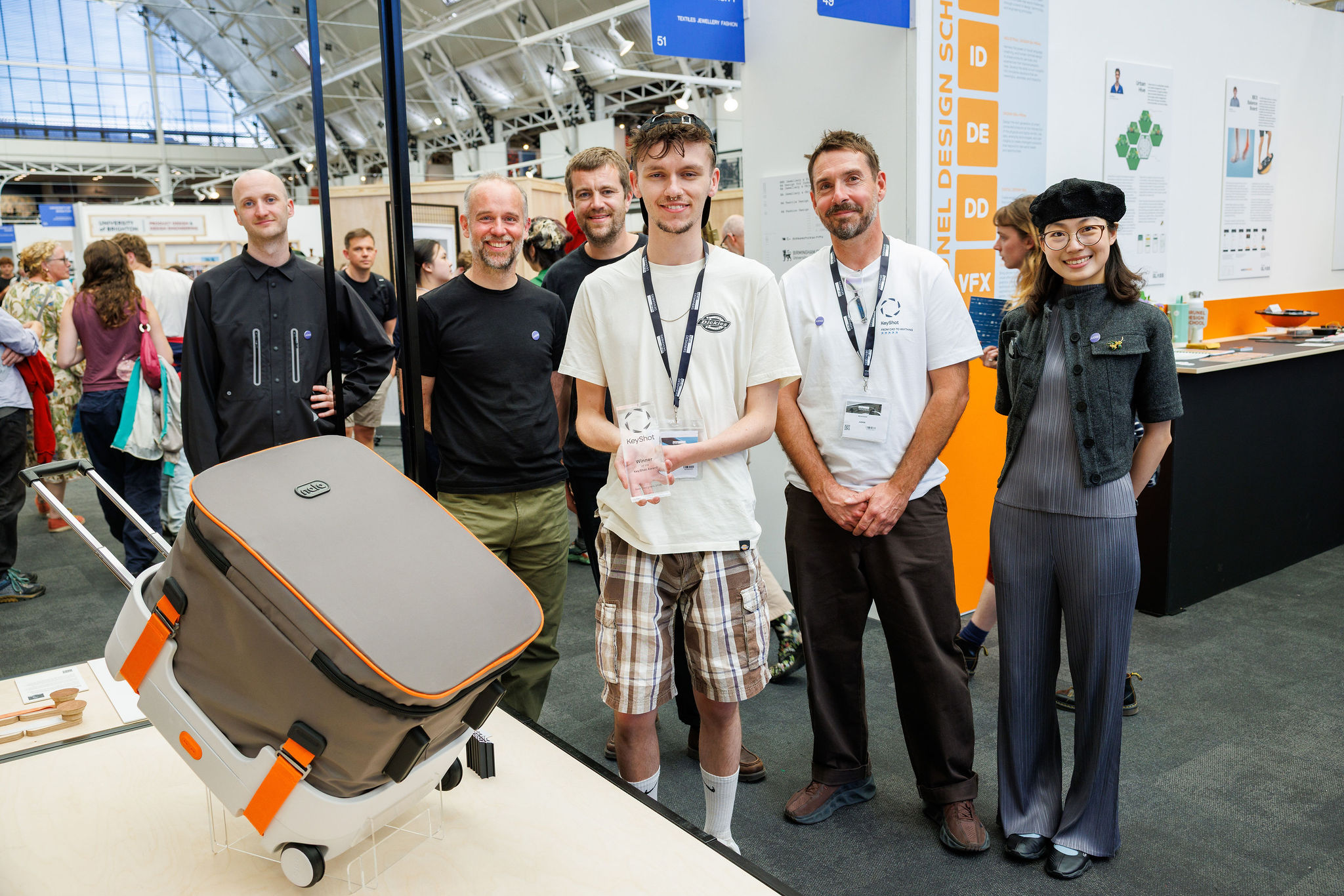
The judging panel with Sam. From left: Liam Martin, Visune. Richard Hartshorn, Goodwin Hartshorn. Tom Jarvis, Kingfisher. Sam Collins. Richard Gale, KeyShot. Jennifer Jilei Z, Lacoste.
Can you introduce yourself?
I am a recent product design graduate from Sheffield Hallam University, where I built on the passion for industrial design that first developed during my Foundation Diploma at Leeds Arts University. The foundation year gave me the opportunity to explore a wide range of creative disciplines before specializing in 3D design. It was through workshop experimentation, model making and hands-on prototyping that I realized product design was the path I wanted to pursue.
During my degree, I also completed a year-long placement in industry, which gave me valuable commercial experience across a variety of projects and strengthened my appreciation for collaborative design. I enjoy working across different sectors, from medical devices to consumer products, because it is the design process itself that motivates me most.
My approach is heavily insight-driven. I enjoy understanding workflows, finding pain points, and speaking directly with the people I am designing for to uncover opportunities that can make a genuine difference. For me, successful products are not only desirable and well resolved but also deliver meaningful real-world benefits for the people who use them.
What was the inspiration behind your winning project?
The project began with extensive primary research to identify meaningful design opportunities. Through this process I became interested in community midwifery, an area I initially knew little about. I immersed myself in understanding the profession by speaking with practizing community midwives, the Royal College of Midwives and Sheffield Hallam University's midwifery course to build a genuine understanding of their day-to-day challenges.
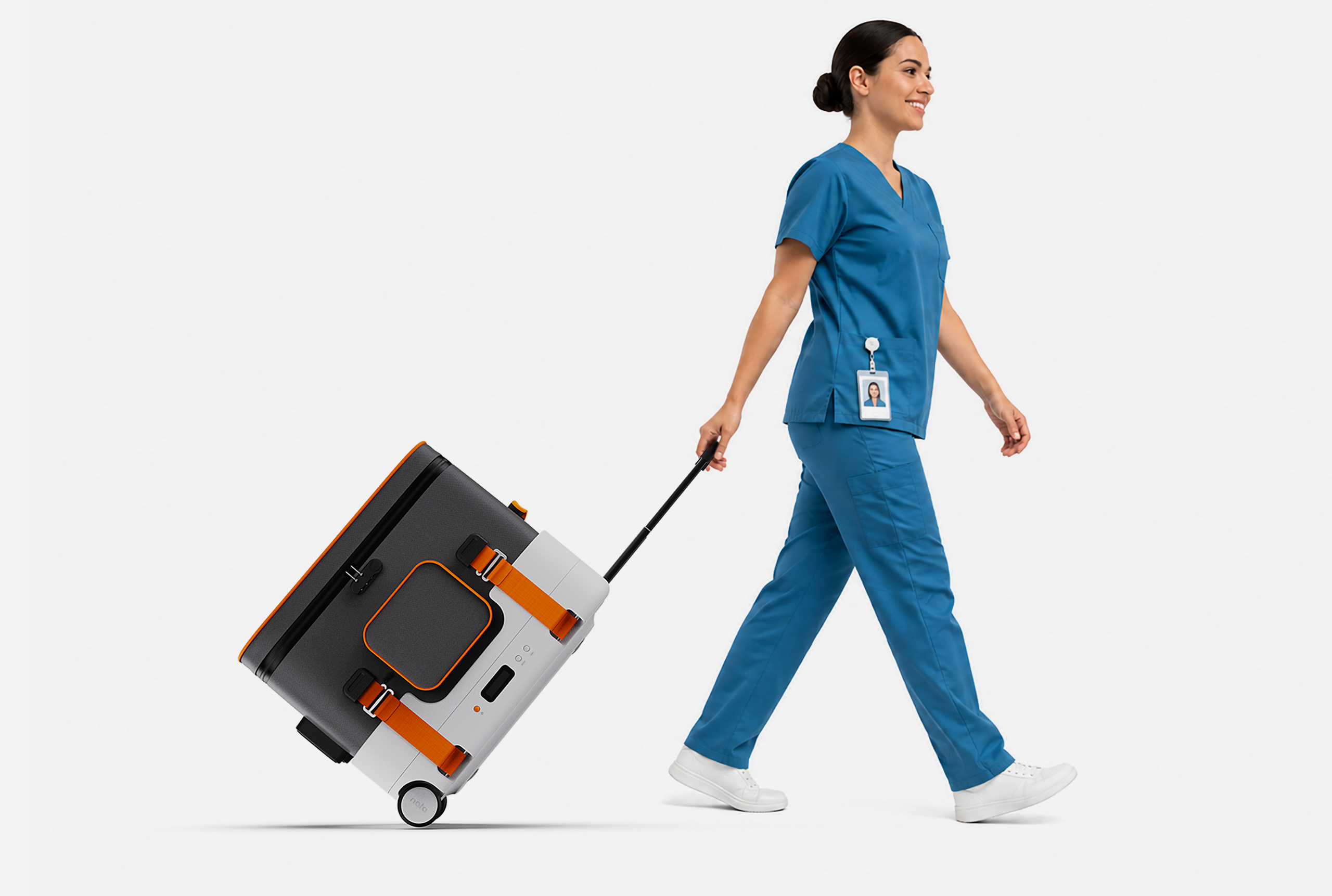
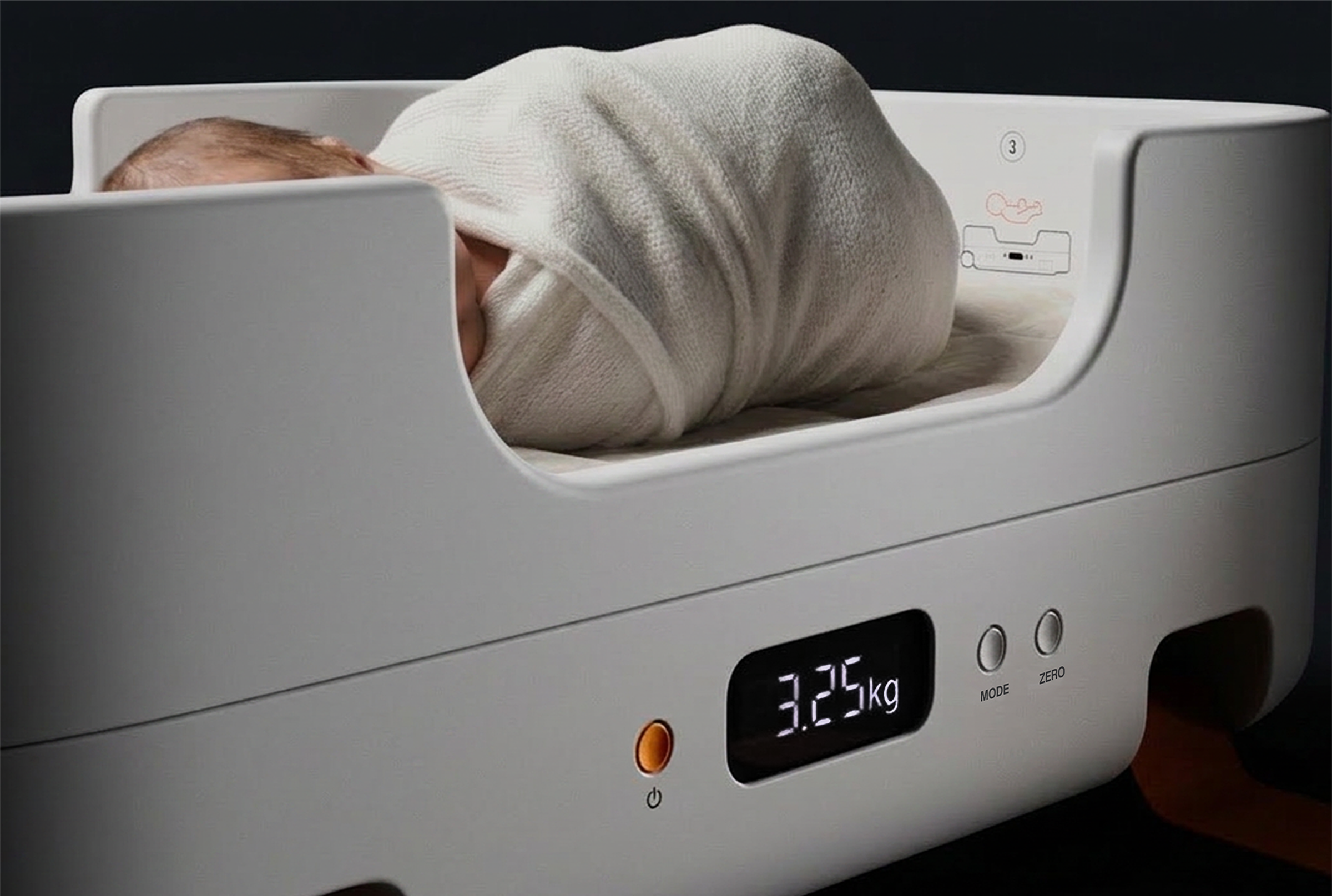
One recurring pain point was the physical and cognitive burden of transporting multiple pieces of heavy equipment between home visits, particularly baby weighing scales. Community midwives work within short appointment windows, meaning valuable time is often spent setting up and packing away equipment rather than focusing on the patient.
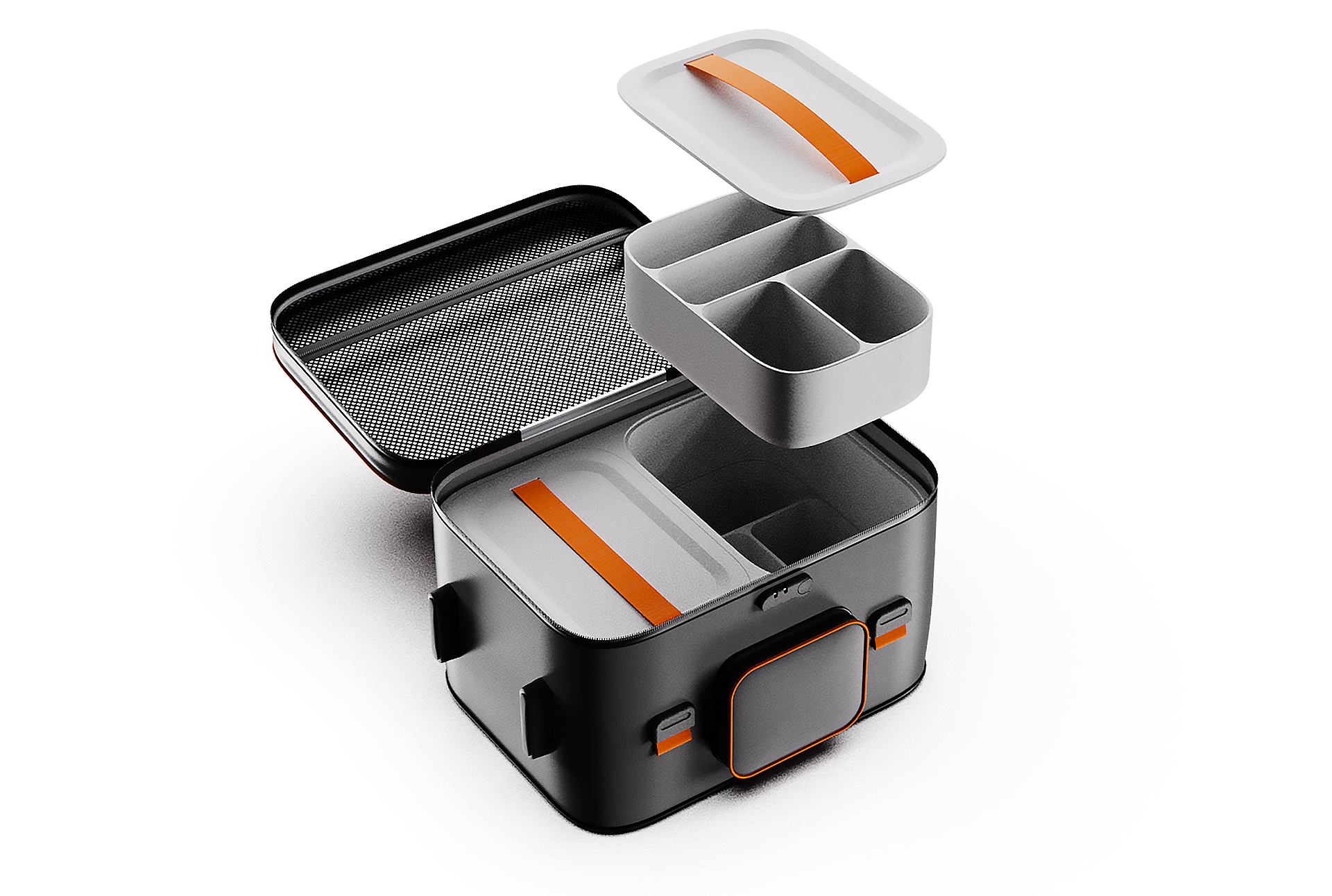
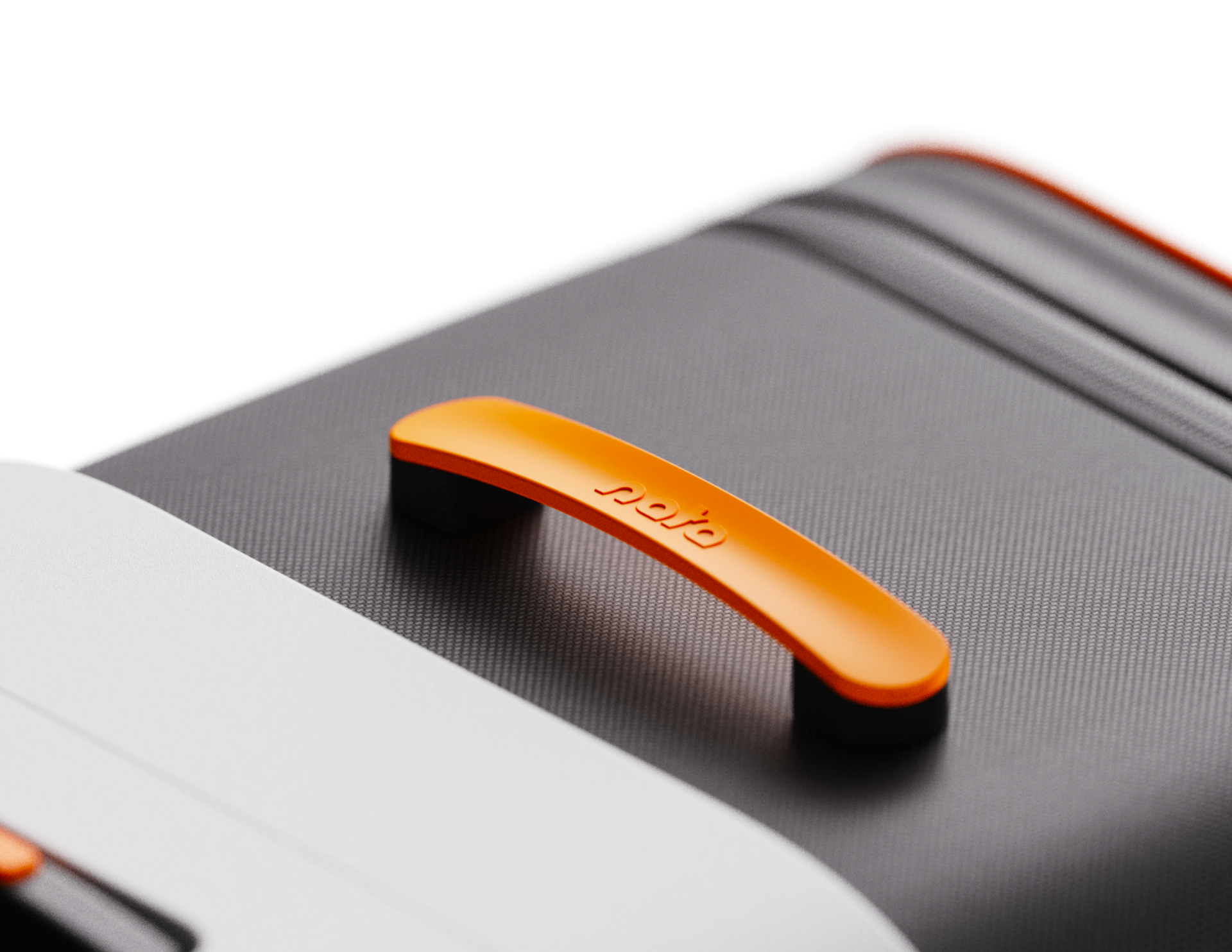
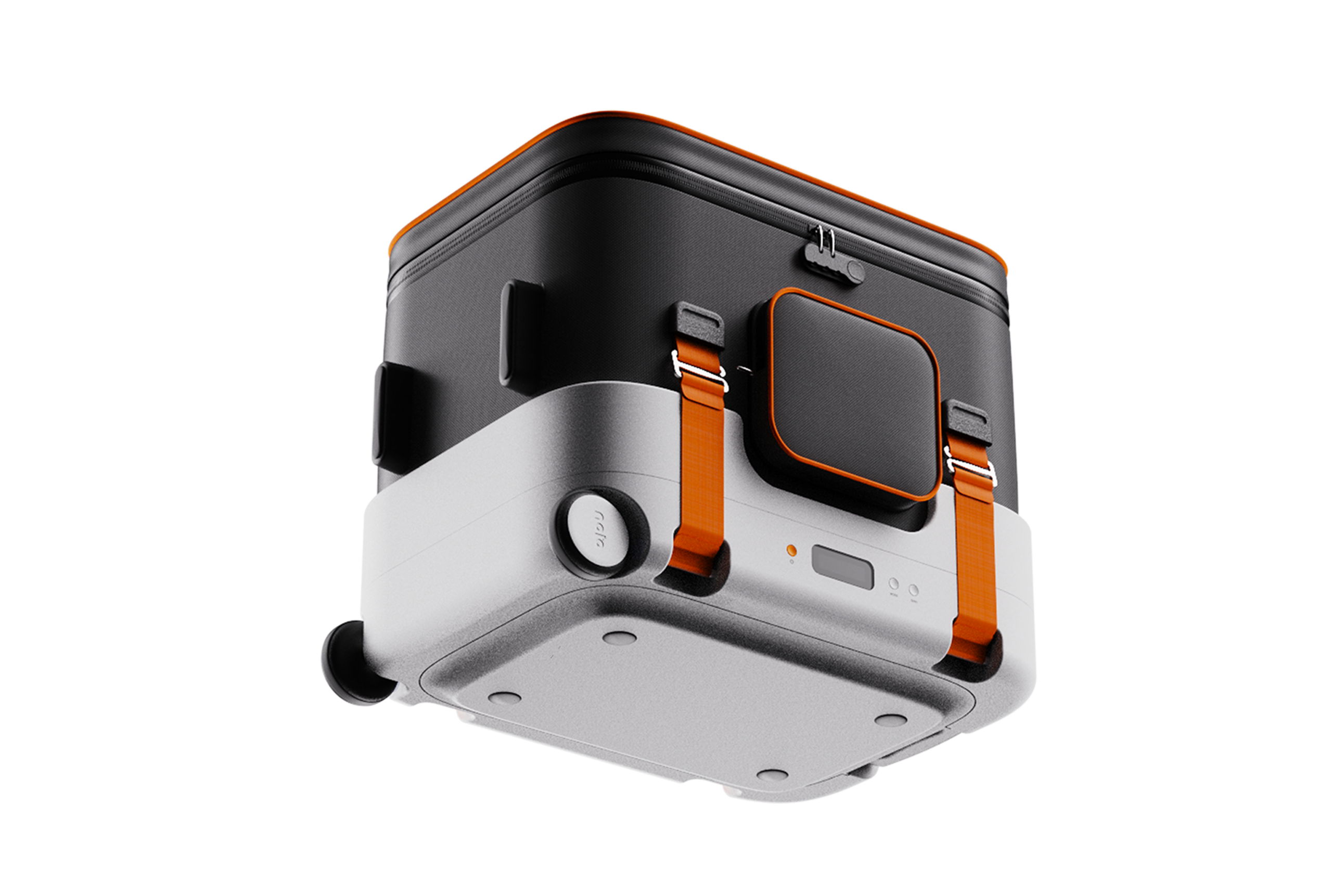
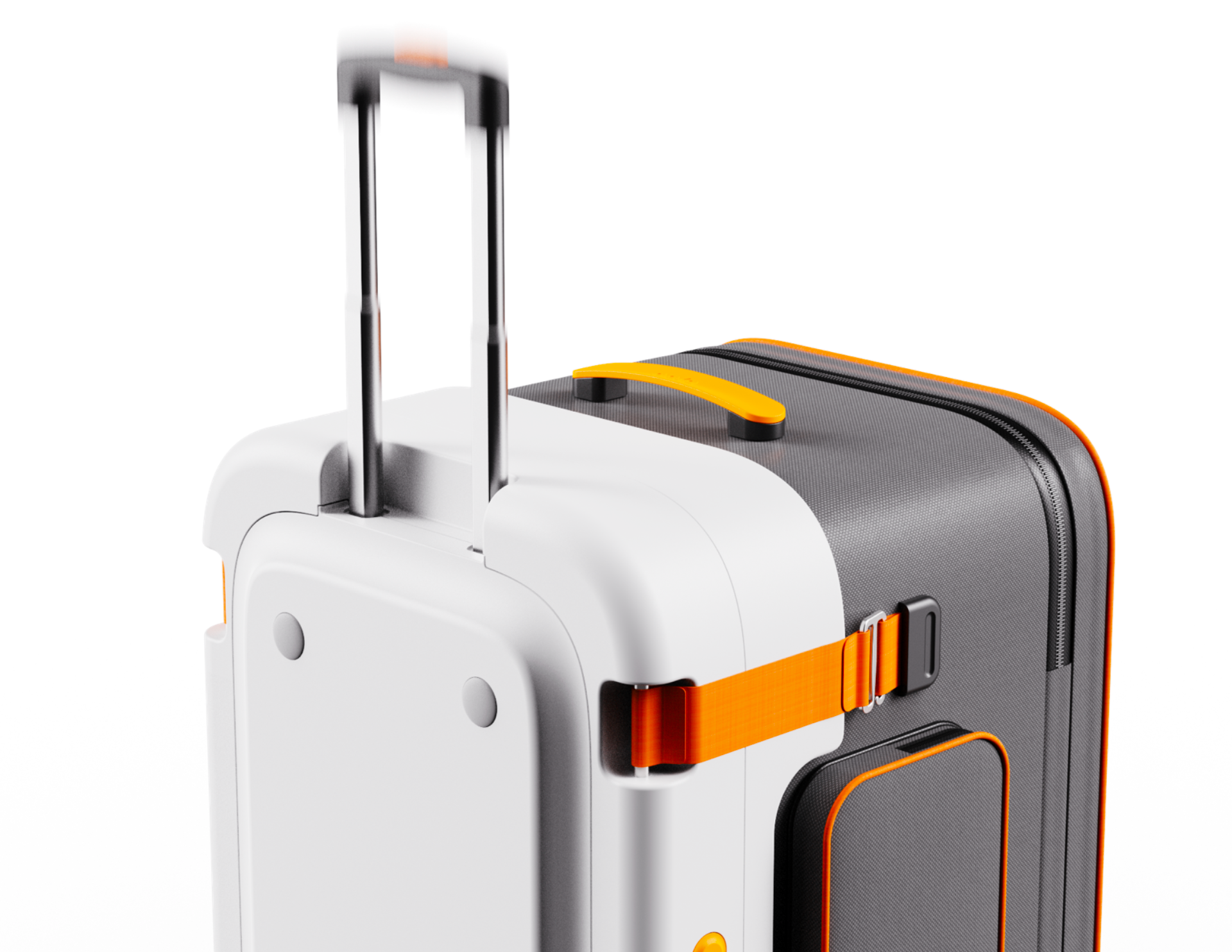
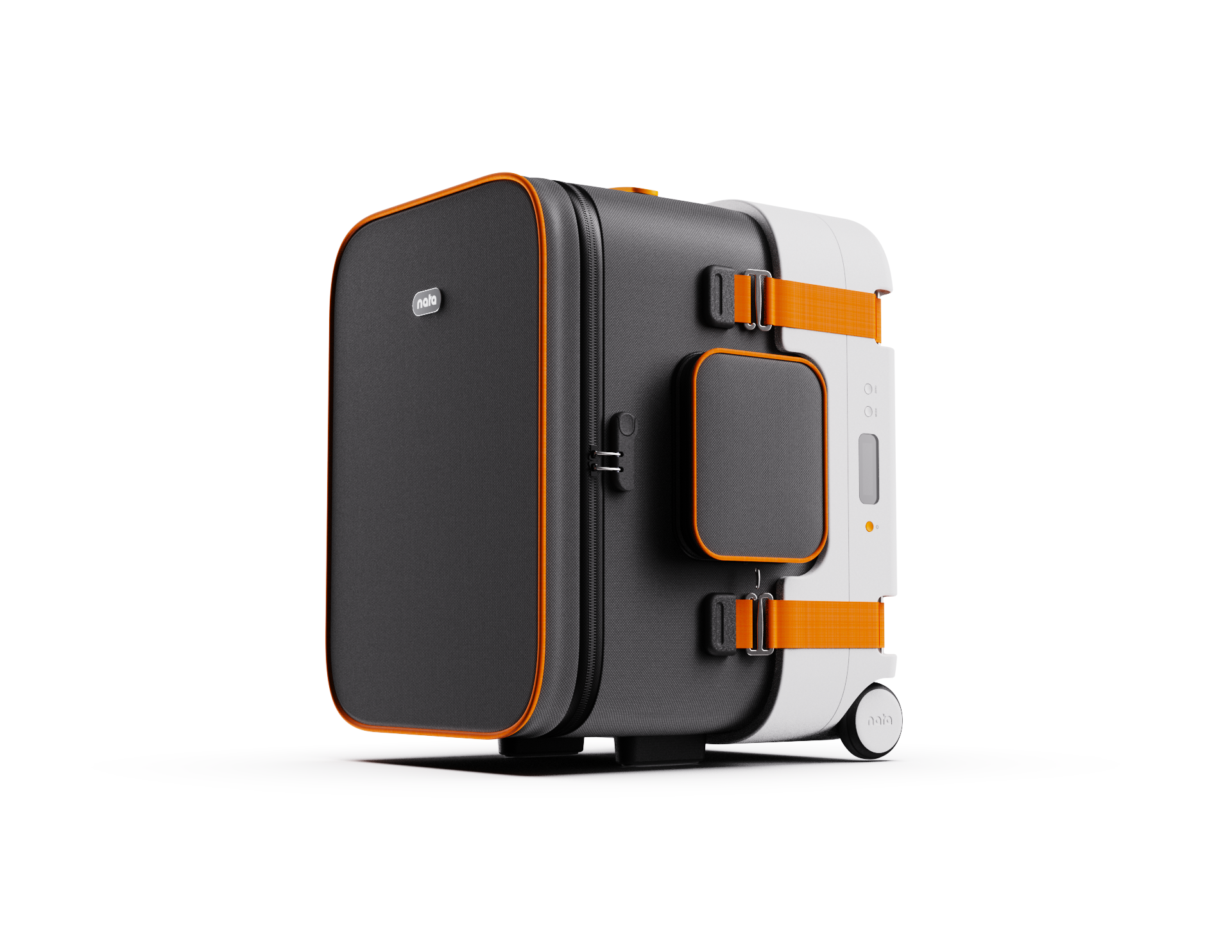
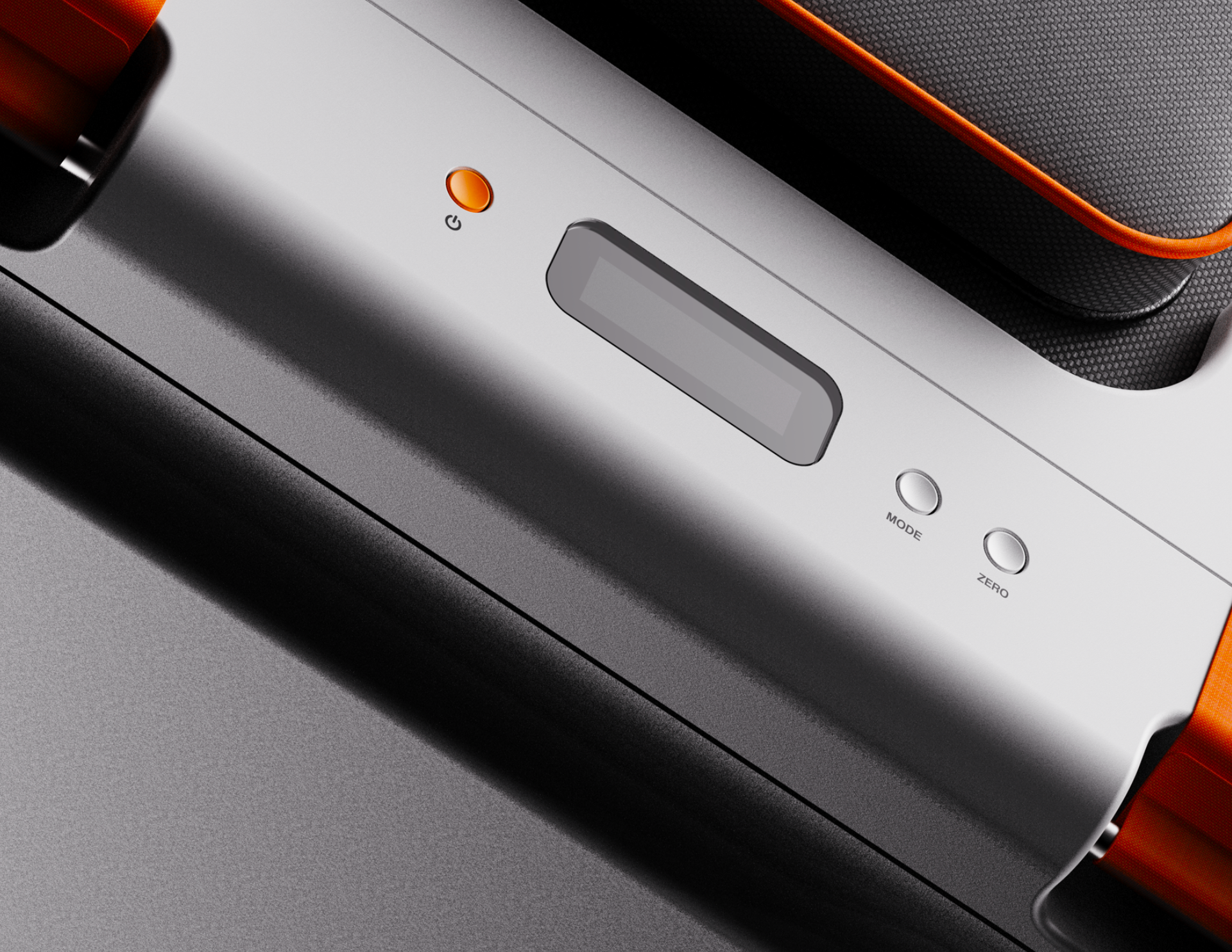
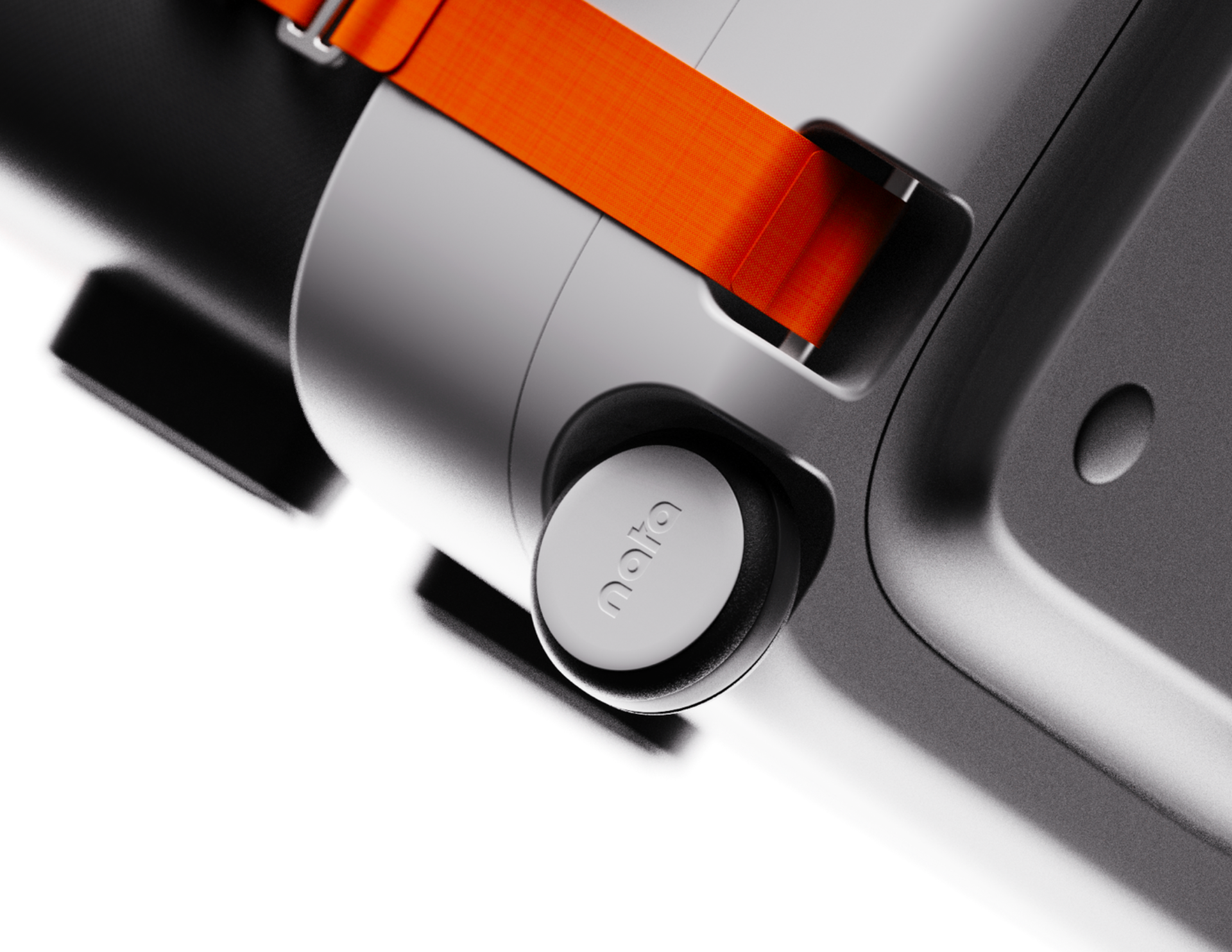
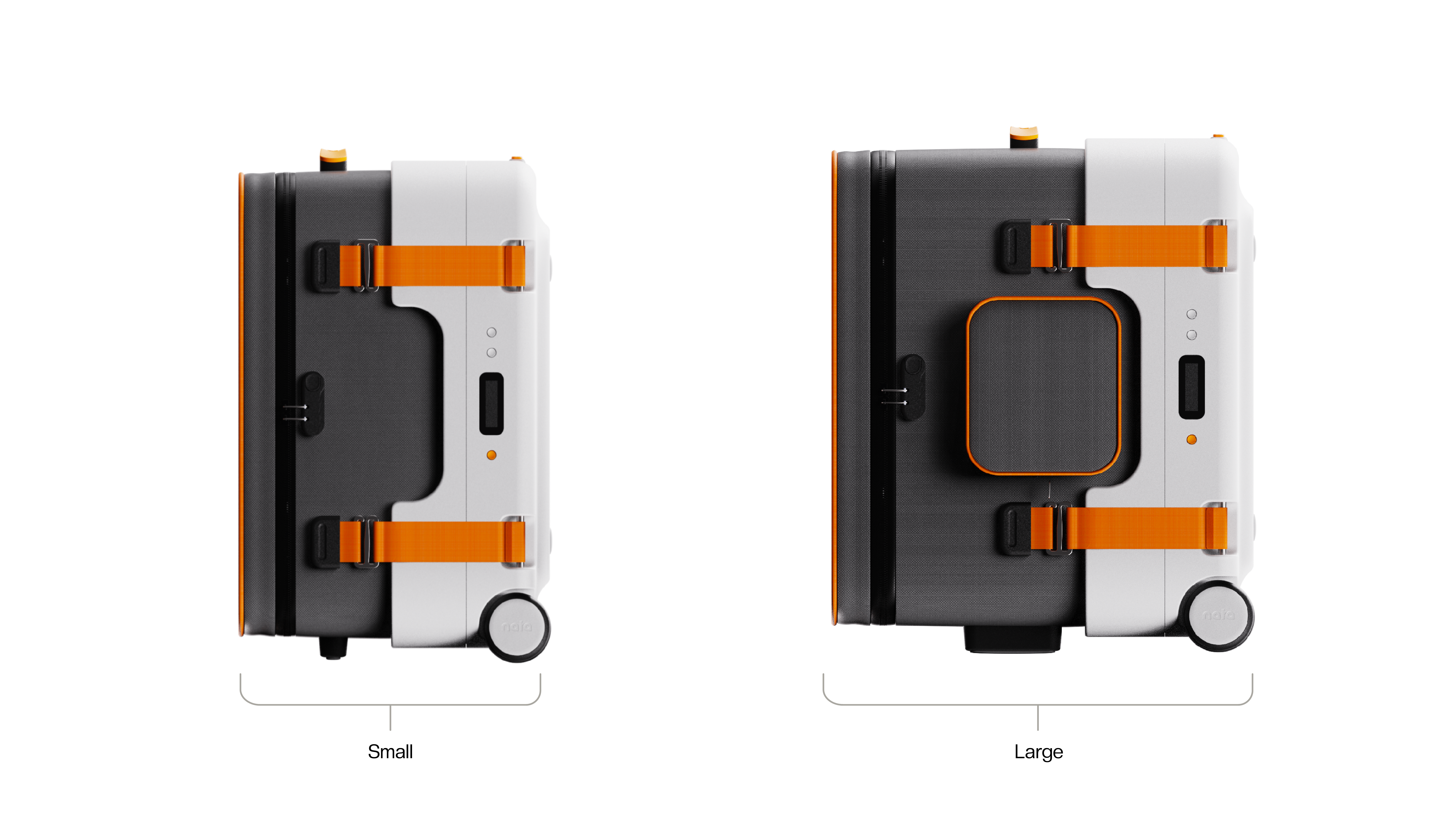
This insight led me to create Nata; a modular midwifery kit designed around their workflow. The system combines a suitcase-style hard base with integrated baby weighing scales, reverse charging for electronic devices, data transfer capabilities and a removable soft bag containing modular storage. By reducing both logistical and cognitive workload, the design allows midwives to spend more time where it matters most, with their patients. Every major design decision was informed through collaboration with the people who would ultimately use it.
"KeyShot comes with an incredible library of materials and lighting environments, but they are only the starting point. Some of my favorite materials, lighting setups and render styles have come from building custom assets and simply exploring what the software can do."
是什麼讓您對設計產生興趣?
My interest in design really began during my Foundation Diploma at Leeds Arts University. Starting on a mixed creative course allowed me to explore different disciplines before choosing a specialty, and I quickly found myself drawn to 3D design. I loved spending time in the workshops, building models and bringing ideas into the physical world.
That passion continued at Sheffield Hallam University, where the larger workshop facilities and support from tutors allowed me to push my ideas further and develop the kinds of products I was genuinely interested in creating. Since then, I have enjoyed tackling projects across a wide range of sectors, always driven by the challenge of solving real problems through thoughtful design.
What modeling software do you use?
SolidWorks is my modelling software of choice and has been my primary CAD package since learning it at Sheffield Hallam University. I enjoy how quickly I can develop and refine ideas while maintaining an elevated level of precision, whether I am creating complex assemblies or preparing models for rendering. It integrates seamlessly with my KeyShot workflow, making it easy to iterate on concepts and produce high-quality visualizations throughout a project.
Where in the process do you use KeyShot Studio?
I use KeyShot throughout my design process rather than only at the end. Early on, I will bring CAD models into KeyShot to quickly compare different forms, materials and finishes in a much more realistic context than CAD alone can provide.
As projects develop, I use it to create visuals for design reviews and presentations, helping communicate ideas more effectively than screenshots from CAD software. Once the design is finalized, KeyShot becomes my primary tool for producing final renders and animations before moving into physical model making and portfolio production.
您最喜歡KeyShot 哪些KeyShot 或功能?
Animation is probably my favorite feature. Whether it is adding subtle movement to a still render or producing a full product animation, it brings a design to life in a way that static images cannot.
I also use Studios constantly. Being able to create different lighting environments, camera setups, and scene variations, then switch between them instantly, makes presenting products incredibly efficient. I appreciate a clean workflow just as much as a beautiful render.
Another feature I think deserves more attention is the photographic image adjustments. Being able to fine-tune contrast, white balance, and exposure directly within KeyShot makes a huge difference to the final image and is something I use on almost every render.
What advice would you give to students interested in doing what you do?
Do not fear experimentation. KeyShot comes with an incredible library of materials and lighting environments, but they are only the starting point. Some of my favorite materials, lighting setups and render styles have come from building custom assets and simply exploring what the software can do. It can feel overwhelming at first because there are so many features, but taking the time to play, test and iterate will pay off.
More broadly, I would say that excellent product design starts long before CAD. Invest time in research, speak to the people you are designing for and really understand their workflows and pain points. Those insights are what lead to meaningful ideas. Do not be afraid to make mistakes either. Build rough models, prototype often and stay hands-on throughout the process. The more you make, the more you learn.
"I use KeyShot throughout my design process rather than only at the end. Early on, I will bring CAD models into KeyShot to quickly compare different forms, materials and finishes in a much more realistic context than CAD alone can provide."
相關藝人